
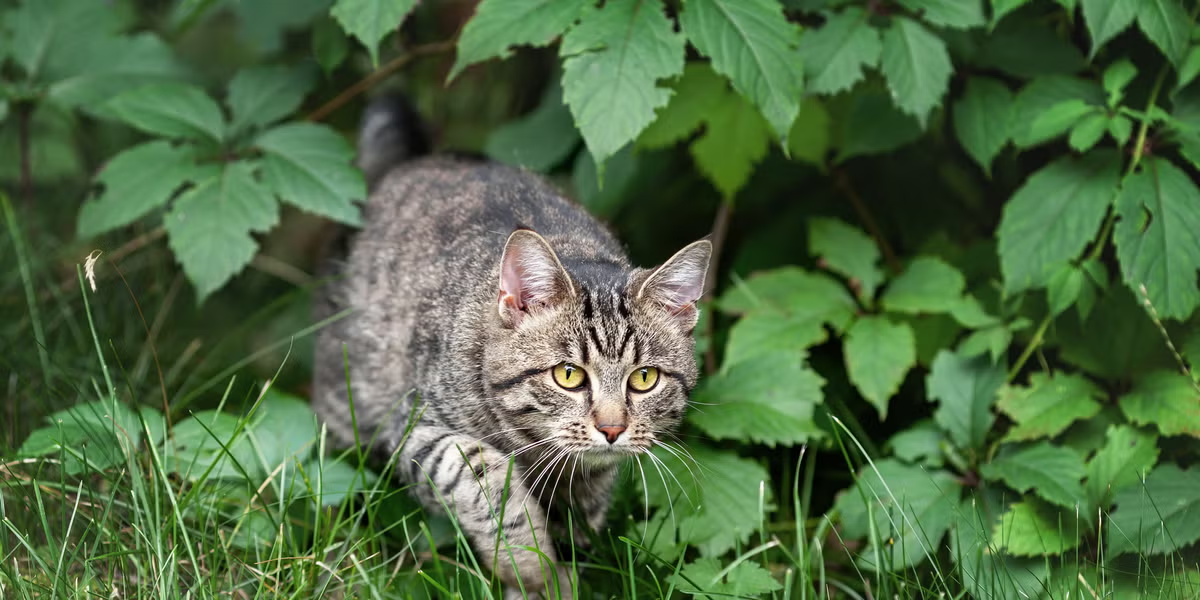
A cat’s home is more than just a place to sleep and eat. It is a carefully mapped world filled with scent markers, favorite vantage points, hidden retreats, and invisible boundaries that only the cat fully comprehends. Watching a cat patrol a hallway or rub its cheek against furniture reveals a quiet but deliberate pattern of ownership. What looks casual on the surface often reflects instinct rooted deep in feline history.
Territory shapes nearly every aspect of a cat’s behavior. From where they choose to nap to how they react to visitors, their sense of space influences daily life in subtle but powerful ways. Recognizing these patterns changed how I interpreted certain behaviors that once felt random or even problematic.
Exploring understanding territorial behavior in cats means looking beyond the obvious. It involves recognizing that many actions are not personal or spiteful but deeply instinctual. Once that perspective settles in, the behavior begins to make sense.
The Instinct Behind Territory
Cats evolved as solitary hunters. Unlike pack animals that rely on group cooperation, wild ancestors survived by claiming and defending individual hunting grounds. That instinct remains intact even in domesticated cats lounging on living room couches.
Territory provides safety and resource control. Food sources, safe resting spots, and escape routes all fall within this invisible boundary. Even indoor cats who never step outside still feel the need to define and monitor their space.
I began noticing how my cat gravitated toward certain windowsills and corners. These were not random preferences. They were strategic positions offering visibility and security. Observing this pattern revealed how deeply ingrained territorial instincts remain.
Understanding territorial behavior in cats requires acknowledging that domestication softened certain traits but did not erase them.
Scent Marking And Silent Communication
Scent plays a crucial role in feline territory. Cats possess scent glands on their cheeks, paws, and tails. When they rub against furniture or people, they are not simply seeking affection but marking ownership.
That gentle head bump against a table leg deposits scent invisible to humans but meaningful to other cats. Scratching surfaces serves a similar purpose. It leaves both a visual mark and a scent signal from glands in the paws.
Urine marking represents a more intense territorial signal. This behavior often emerges in response to stress, new animals, or environmental changes. While frustrating for owners, it communicates anxiety about boundaries rather than defiance.
Paying attention to these signals helps decode what the cat may be experiencing. Scent marking is a language, even if humans cannot smell the words.
Vertical Space And Ownership
Cats think in three dimensions. Territory is not limited to floor space. Shelves, counters, and tall furniture become extensions of their domain.
Height offers safety and observation advantages. A cat perched above ground level can monitor activity while feeling secure. I realized that denying access to elevated spots sometimes increased restlessness.
Providing acceptable vertical spaces, such as cat trees or wall shelves, often reduces tension. These structures give cats control over their environment. A sense of control lowers anxiety and defensive behavior.
Understanding territorial behavior in cats includes recognizing their need to claim space upward as well as outward.
Reactions To New Animals
Introducing a new pet can trigger dramatic territorial responses. Hissing, growling, swatting, or hiding are common initial reactions. These behaviors reflect insecurity rather than inherent hostility.
From the cat’s perspective, an unfamiliar animal represents a potential threat to resources. Food bowls, litter boxes, sleeping areas, and even human attention suddenly feel uncertain. Defensive behavior becomes a survival strategy.
Gradual introductions with scent swapping and controlled exposure reduce stress. Rushing the process often intensifies territorial aggression. Patience allows cats to renegotiate boundaries without feeling overwhelmed.
The process reveals how strongly territory influences emotional stability. Disruptions must be handled carefully to prevent long-term tension.
Human Guests And Shifting Boundaries
Visitors can also disrupt territorial comfort. Some cats retreat immediately, while others observe cautiously from a distance. A few may even display defensive behaviors if they feel cornered.
Changes in scent and noise alter the environment. Loud voices or unfamiliar smells can create unease. I noticed that providing a quiet retreat space during gatherings helped maintain calm.
Respecting a cat’s choice to hide prevents forced interaction. Pushing contact often backfires. Allowing voluntary engagement builds confidence over time.
Understanding territorial behavior in cats extends beyond animal interactions. Human activity also shapes their sense of security.
Multi-Cat Households And Resource Distribution
Sharing space challenges natural instincts. Multiple cats must negotiate overlapping territories within limited square footage. Without adequate resources, conflict becomes more likely.
Food bowls, litter boxes, and resting areas should be distributed strategically. Placing them in separate zones reduces competition. I found that increasing resource availability dramatically reduced tension.
Cats establish subtle hierarchies, even without overt fighting. One may claim specific rooms while another prefers different areas. Respecting these preferences prevents unnecessary stress.
Territorial harmony depends on thoughtful arrangement rather than forcing uniform behavior.
Signs Of Territorial Stress
Behavioral changes often signal territorial discomfort. Excessive grooming, hiding, aggression, or litter box issues may reflect anxiety about space.
Increased marking behavior frequently coincides with environmental shifts. Renovations, new furniture, or rearranged layouts can unsettle a cat. Familiar scent patterns disappear, prompting renewed marking efforts.
Observing these signals early allows proactive adjustments. Restoring familiar scents or introducing calming aids may help stabilize behavior. Ignoring the signs often leads to escalation.
Understanding territorial behavior in cats involves recognizing that stress may stem from spatial insecurity rather than personality flaws.
Outdoor Access And Expanding Boundaries
Cats with outdoor access experience territory differently. Their domain may extend across yards, fences, and neighboring spaces. Encounters with other animals become more frequent.
Territorial disputes outdoors can lead to injuries or heightened anxiety indoors. Even seeing another cat through a window may trigger agitation. Window perches sometimes become battleground observation posts.
Limiting exposure to visual triggers can reduce stress. Frosted window film or strategic furniture placement may help. Managing what the cat sees shapes how it feels about its territory.
Outdoor territory introduces additional layers of complexity to feline behavior.
The Role Of Routine And Predictability
Consistency strengthens a cat’s sense of security. Regular feeding times, stable furniture placement, and predictable daily rhythms reinforce territorial comfort.
Sudden changes can unsettle even confident cats. Travel, new work schedules, or prolonged absences may disrupt stability. Gradual transitions ease adjustment.
Maintaining familiar scent markers during changes supports emotional balance. Leaving bedding unwashed during a move, for example, preserves recognizable smells.
Understanding territorial behavior in cats means valuing stability as a foundation for well-being.
Encouraging Healthy Territorial Expression
Providing appropriate outlets allows cats to express instincts constructively. Scratching posts, climbing structures, and designated resting areas channel natural behaviors into acceptable forms.
Interactive play sessions mimic hunting within safe boundaries. This activity satisfies instinct without threatening household harmony. A mentally stimulated cat is less likely to fixate defensively on territory.
Environmental enrichment reduces boredom and anxiety simultaneously. Rotating toys and rearranging climbing paths adds novelty without overwhelming the space.
Supporting natural instincts leads to fewer behavioral conflicts over time.
Misinterpreting Territorial Behavior
Owners sometimes label territorial actions as stubbornness or spite. Scratching furniture, for instance, often reflects marking rather than destruction. Addressing the root need prevents resentment.
Punishing marking behavior rarely solves the underlying issue. It may increase stress and intensify the problem. Redirecting and managing environment proves more effective.
Shifting perspective transforms frustration into empathy. Recognizing instinct behind behavior allows calmer, more rational responses.
Understanding territorial behavior in cats involves challenging assumptions and embracing a broader view of feline psychology.
Building Trust Within Shared Space
Cats coexist with humans by blending instinct with adaptation. Respecting boundaries fosters mutual trust. Forcing interaction or constantly rearranging their environment can erode confidence.
Providing safe zones where the cat can retreat undisturbed reinforces security. These spaces act as anchors during stressful moments. Confidence grows when escape routes exist.
Trust deepens when territorial signals are acknowledged rather than dismissed. Listening to subtle cues strengthens the relationship naturally.
Coexistence thrives on balance between shared areas and private domains.
Final Thoughts
Territorial instincts shape much of what cats do, from rubbing against furniture to reacting strongly to newcomers. These behaviors reflect survival strategies refined over generations. Recognizing that foundation changes how challenges are approached.
Exploring understanding territorial behavior in cats highlights the importance of scent, vertical space, resource distribution, and routine. Respecting these elements reduces stress and strengthens harmony within the home.
A cat that feels secure in its territory behaves with greater confidence and calm. Supporting that sense of ownership creates a more peaceful living environment for both pet and owner. Once those invisible boundaries are acknowledged, daily interactions feel far more intuitive and connected.
